
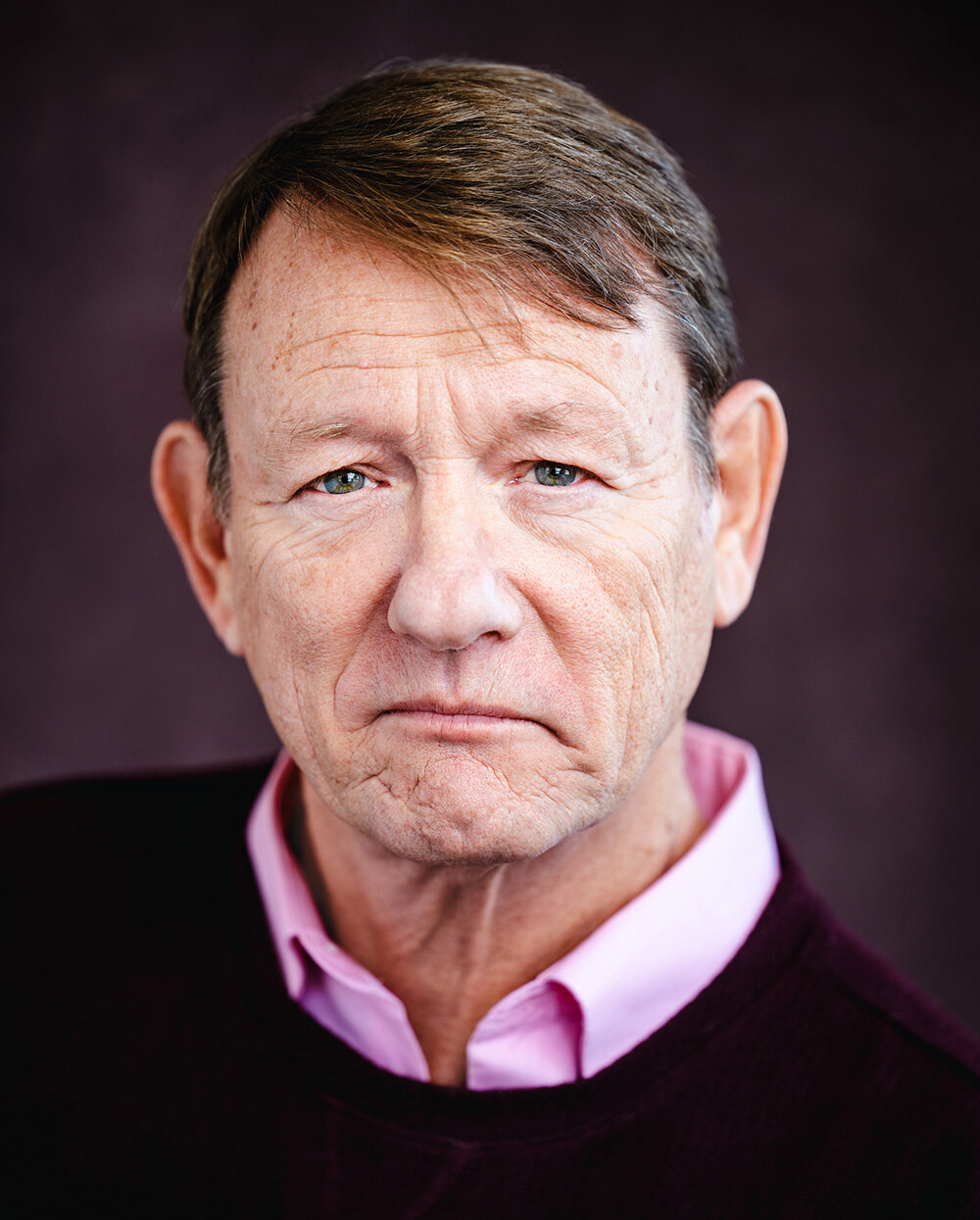
BF26: After decades away (some as a pilot) David Kirby returns to Blyth
BY SHAWN LOUGHLIN
Years ago, in 2019, there was surely a record due to be set for the longest stretch between engagements at the Blyth Festival. Don Nicholson was set to play P.T. Barnum in Sean Dixon’s Jumbo, but had to bow out due to illness, eventually being replaced by Artistic Director Gil Garratt in the short-term and Layne Coleman in the long-term. Nicholson was last part of the company in the very first season: 1975.
And while Nicholson didn’t end up making his triumphant return to the Memorial Hall stage, if he had, David Kirby would have him beat this season. Kirby was part of the company in 1978, acting in Peter Colley’s The Huron Tiger and Keith Roulston’s His Own Boss, while also serving as an assistant stage manager for Ted Johns’ The School Show. This season, almost 50 years later, he’ll be back on the Memorial Hall stage in Dry Streak and The Last Mayor of Rusty River.
Being in Blyth was his first professional acting job. Kirby says he remembers living in a farmhouse just northwest of the village with a handful of friends that summer. He didn’t have a car, so he’d cycle into Blyth when he was on the call sheet. Kirby says he has great memories of that first summer and all that Huron County had to offer in the late 1970s to a budding theatre professional who was still studying at York University.
Much has transpired since that care-free summer, with Kirby finding success in a second career along the way.
From Blyth, Kirby would go on to work all over the country throughout the 1980s, finding roles in Saskatchewan, Vancouver, London, Muskoka and more, eventually settling in Vancouver in the 1990s. He was working on a show in Edmonton when he met his wife, the esteemed lighting designer Louise Guinand, who has many Blyth Festival credits to her name and who will be part of this season’s company as well. They would eventually settle in Stratford, where they’ve now been for many years - though not without a few intermissions along the way.
The second career mentioned earlier is that of a pilot. Kirby, as a young man, went past the Toronto Island airport, now known as the Billy Bishop Toronto City Airport. There, he saw a sign insisting that folks could learn to fly for $35.
Kirby soon found out that was simply an introductory rate and that it would be much, much more expensive, but, he told The Citizen, like many pilots, once he was in the air, he was hooked. He began earning credentials and eventually was qualified to fly on his own and become an instructor, which he did for a time.
When acting roles began to dry up, he returned to the skies, spending time in Northern Ontario as a member of forest fire crews - specifically as a bird dog pilot with the Air Attack Officer who directs the water bombers.
However, after too much time up north, he wanted to be closer to home and returned to instructing at the Stratford Municipal Airport.
He has since taken on a handful of acting roles while juggling flight instruction, but when he had a meeting with Garratt earlier this year about possibly returning to theatre - specifically the Blyth Festival - it was a discussion he was happy to have.
And so it came to pass that Kirby would be part of the 2026 Blyth Festival season alongside his wife, who will be designing the lighting for Curveball outdoors on the Harvest Stage.
In Dry Streak, he’ll be playing Rob Armstrong. Kirby is familiar with the play, which was first produced in the late 1980s, and says that the updates made by playwright Leeann Minogue have been really interesting over the years.
In The Last Mayor of Rusty River, he’ll be playing Jerry, who is a buddy of Larry, the mayor, who will be played by Benedict Campbell, who Kirby has known for years. As a result, he thinks it will be interesting to take the stage alongside his long-time friend.
As for this season, returning all those years later, Kirby says it will be a “hoot” to be back in Blyth and back on the Memorial Hall stage. So much has changed since that summer of 1978 and yet so much has remained the same as far as the Blyth Festival’s continuing commitment to telling Canadian stories in a small village in Huron County.