
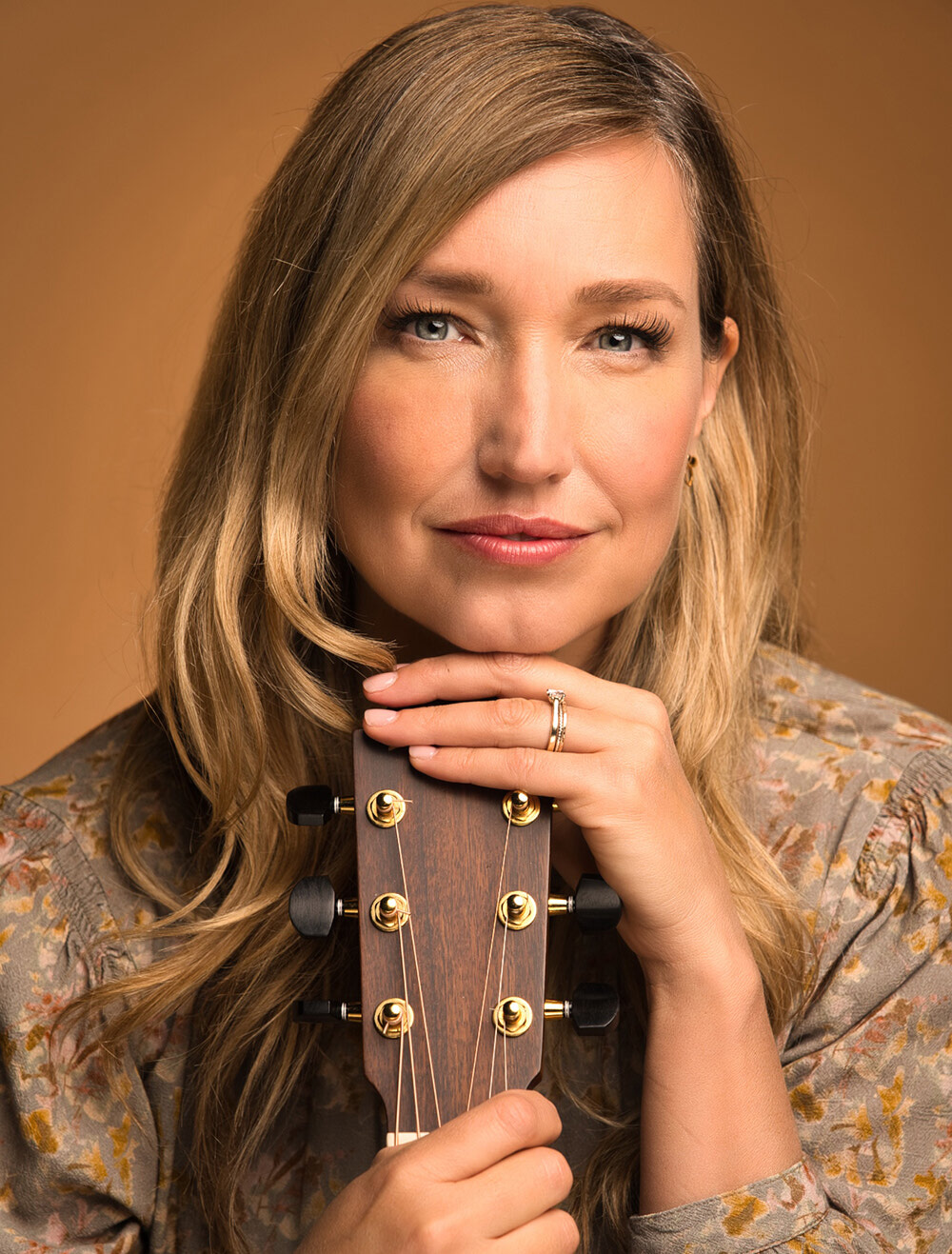
BF26: Dayna Manning brings her musical stylings to Blyth for the first time
BY SCOTT STEPHENSON
When Dayna Manning was asked to create the songs for a brand new musical, it brought together two of her passions: music and baseball. “Baseball was my sport when I was a kid,” the Juno-nominated singer told The Citizen. “That’s the sport I played, and I collected the autographs from the Blue Jays. That was my favourite thing. And then also, I’m a big musical fan - I’ve probably seen every musical at Stratford Festival since I was eight years old.”
Now, those worlds will finally collide in Curveball: The Fast-Pitch Ladies from the Factory Floor, by Kelly McIntosh, Andy Pogson, Stacy Smith and Severn Thompson. Curveball is the Blyth Festival’s madcap musical interpretation of the true tale of the Kroehler Girls - Ontario’s very own team of baseball pioneers. It’s a project Manning feels unusually well-positioned to take on. “I just feel uniquely made to do this one,” she declared.
Manning’s well-fated connection to the production began several years ago, when the show existed in an earlier form during the height of pandemic-era theatre. “When they did the play at the Here For Now Theatre [in Stratford] in 2021, it was called Kroehler Girls!,” she recalled. “It was really interesting because it was in COVID times, and it was outside, in a tent, on the site of the ball diamond where the real Kroehler Girls actually played.”
Manning was approached about contributing music to the production at the time, but it was not to be. “It was just too crazy of a time for me,” she said. “I didn’t have the time. And then I went and saw the play and I absolutely loved it.”
What resonated most deeply with her was not only the story unfolding onstage, but the audience’s reaction to it. “The people in the audience had history with this play,” Manning pointed out. “I loved watching them see their own family’s history portrayed in an artistic way.”
The idea that communities should see themselves reflected through art has become central to Manning’s creative philosophy in recent years. “We have to tell our community stories,” she insisted. “And we need to have a place to unite and talk about these stories.”
That sense of purpose has increasingly shaped her songwriting over the years. “As a songwriter, you kind of start out writing songs to lament your life,” she reflected. “But that really changed for me in my thirties and forties. I just started really loving writing songs about my community, or places, or history.”
The way Curveball fits into that ethos feels as natural to Manning as a hand into a baseball mitt. “I have a history of writing a lot of historical-based songs and doing lots of research,” Manning explained to The Citizen. “I thought it paralleled my own songwriting process in the way that they researched the play.”
Curveball is a musical being created through a collective collaborative process, and a big part of any musical is, of course, the music. “I love collaborating. I think I’ll always prefer collaboration over going solo,” she said. “Although, I do like to be alone as much as possible when I’m crafting a song. I need to listen to the song that’s going on in my brain so I can get it out.”
Often, the music begins forming while simply listening to scenes unfolding in rehearsal. “Everything for me is music,” Manning elucidated. “I love hearing the team read a scene - I have the music started in my head. I usually put myself on mute and start singing what I hear into a voice memo.”
From there, she begins shaping and refining what initially arrives instinctively. “I love being alone to craft and put the song together,” she said. “It’s like a problem-solving exercise.”
Like the play itself, the music for Curveball continues to evolve in real time. “At this stage, I’m still writing songs,” Manning revealed. “This is an entirely new rewrite. At Christmastime, we had about half the play written, so everybody was working on writing the rest of the play all winter.”
Part of that process has involved close collaboration with director Severn Thompson, whom Manning credits as a major creative influence throughout development. “Severn Thompson, the director of our play, has just been really inspiring,” Manning said. “I’ve learned a lot already.”
Together, the team has explored themes that stretch beyond baseball itself, including the longstanding cultural divide between athletics and the arts. “I think the funnest part of the show is that we’ve written in a bit of a conflict between sports and the arts,” Manning explained. “To me, that’s a lifelong conflict that I’ve seen. My father was a music teacher, and it was sometimes hard to get the basketball players to show up for band practice, because they had to choose,” she recounted to The Citizen. “Nineteen fifty three was the championship year for the Kroehler Girls, and it was also the inaugural year of the Stratford Festival,” Manning said. “We’ve had a lot of fun playing with that concept in the play.”
The result, she believes, is a production layered with intersecting themes about identity, creativity, teamwork and community. “I’m completely amazed at how many storylines the playwrights have successfully presented, and how well it is done,” she said. “I’m just really, really excited for people to see it.”
For audiences eager to hear some of the music before opening night, Manning has already shared part of the project publicly. Her recently-released album Field Note includes the single “The Dream Lives in Your Heart,” a song drawn directly from Curveball.