
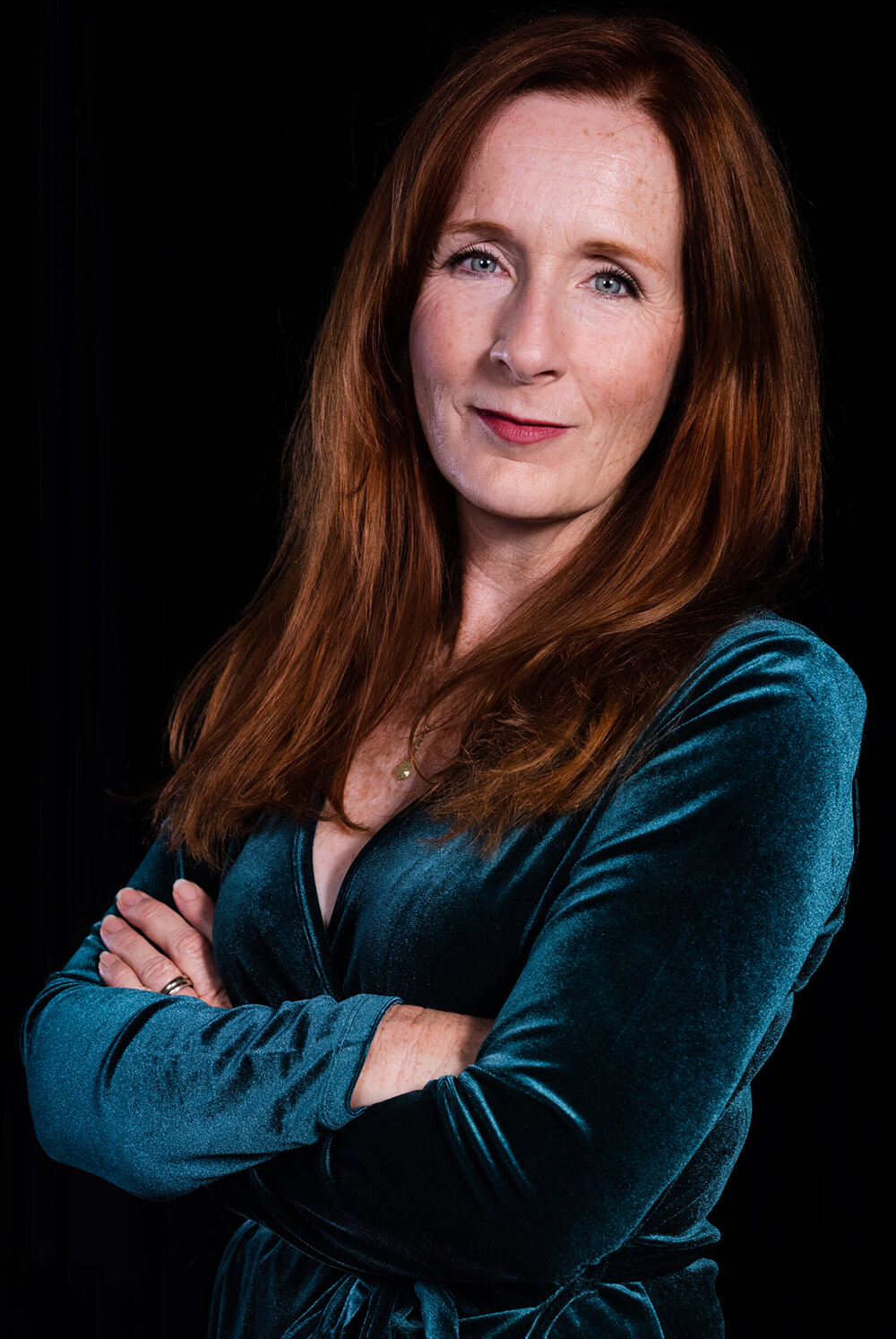
BF26: Mary Francis Moore brings her directorial touch to the Blyth Festival
BY SCOTT STEPHENSON
For director Mary Francis Moore, Blyth is not just a place to make theatre - it’s the summertime setting that seasonally weaves in and out of many milestone memories. “I have great memories of Blyth. I was first here in 2001. My husband was my boyfriend at the time, and he was doing The Outdoor Donnellys - I would come to visit him and hang out,” she recalled. “And the next time I came back, he was my husband. He was doing a show here, and I was very pregnant with our first child, who’s turning 22 this summer.”
For the Festival’s 2026 season, Moore has come back to Blyth to tell the right story for right now. Sisters of ‘78 is a new work by Kristen Da Silva, inspired by the true story of the Fleck Manufacturing strike - a landmark labour dispute that happened in Centralia in 1978.
The project first came to her attention through her work as artistic director of Theatre Aquarius in Hamilton. “I’m a big fan of Kristen Da Silva's work… I was looking for something of hers to showcase at Theatre Aquarius, and her agent said she was working on a project that he thought would interest me,” Moore told The Citizen. “I read the draft, and I loved it!”
A few weeks into rehearsal when we chatted, the cast and creative team were making their way through the ever-evolving process of new play development. “Every project is different. Because this is a brand new play, we’ve been stopping and talking about moments, and the playwright has been bringing in rewrites,” Moore explained. “Today is our sixth day of rehearsal. We did our first stumble through Act One today, for lighting. Our light designer was here today to watch. We wanted to show her how we’re using the space, how we’re using the set - sort of what the geography of the space is, and how we use all the props.”
With a new play, Moore explained, things are always changing. “I think we’ve cut about 15 characters in six days,” she said. “We realized we don’t actually need that person or this person to tell the story… these women - the sisters - are fighting to create this union, and we’ve discovered that it is far more powerful for a lot of those male roles to be nameless and faceless, because they just represent power. The women are trying to fight against something that they can’t put a face to, and they don’t have a name for.”
For Moore, that kind of mid-production discovery is exactly what makes new work so compelling. “I love new work. It is my passion,” she confessed. “I’m always happiest when I’m working on something brand new. It’s all really curiosity-based - we’re all sort of exploring a story, because it’s a true story. We’re exploring the truth of the story, and where the theatricality is in that. I’m really excited by where we’re at right now. I feel like we’re exactly where we’re supposed to be. We’ve got a group of amazing actors. It’s a great team. It’s people who ask really smart questions.”
That team is made up of a mix of old and new faces for Moore. “There are people I’ve worked with before, and it's really nice to revisit those old relationships… And I’m getting to work with brand new people, and discover who they are as artists, and what their voices are on their own,” she pointed out. “It’s really fun to be in Blyth as a director.”
Moore developed her thirst for nouveau theatre at a young age, when she first saw something on stage that she had never seen before. “Growing up in a rural community, I remember going to see theatre as a young child and seeing the world reflected back to me. This was pre-internet and pre-satellite TV and cell phones. We had two TV channels and two radio stations,” she recollected. “Getting to go see a play by a playwright from across the world, to see a story that did not reflect my community at all, was so thrilling! It forced me to look at things with a different perspective.”
Seeing plays from faraway places was all well and good, but Moore soon saw a play more specifically geared toward her community, and recognized the reflection of her own existence on the stage. “It was to feel validated and recognized, and to feel that the things happening in my community were worthy of not just a conversation, but worthy of a production,” she explained. “That’s where I got my bug for new work.”
Sisters of ’78 may be telling a story from years gone by, but Moore believes the Blyth audience will see what’s new and now about the play. “There’s something immediate about what Blyth does… even though this story takes place in 1978, it feels immediate right now,” Moore told The Citizen. “It’s such an amazing story - and it’s a true story! It’s about hope, it’s about belief, and it’s about friendship… I think people will fall in love with these performers - this team is truly extraordinary.”
At its core, she believes the power of theatre transcends geography. Whether in a large city or a small rural town, the essential experience remains the same. “A good play, the more specific it is, the more universal it can feel to the audience,” Moore pointed out. “There’s something about the shared catharsis of sitting in the dark with an audience that you can only get in live theatre. “It doesn’t matter where you see it - whether it’s under the stars or in an auditorium. Whether you’re seeing theatre in Hamilton, or Blyth, or Budapest - it is an experience that you can’t replicate… I truly believe in the power of theatre to change lives. It holds a mirror to us, and shows us who we are and who we can become.”