
FARM 2026: Blyth Growing Project is small but mighty, giving back to those in need
BY SHAWN LOUGHLIN
The Huron County community is blessed with some of the most fertile and productive soil in not just the province, but throughout the country. Thanks to some generous farmers, churches and members of those churches’ congregations, patches of that soil here and there are being used to feed some of those in this world who find themselves without enough to eat on a regular basis through local growing projects, all of which benefit the Canadian Foodgrains Bank.
Just within a few kilometres of Blyth, where The Citizen’s offices are located, there is the Belgrave Growing Project on the Procter family’s land, while one to the south has been growing on Maarten Bokhout and Helena McShane’s property south of the village. There are projects south of Blyth in communities like Varna and Brucefield as well. Right in Blyth is the Blyth project, which utilizes 14 acres of land adjacent to the Howson’s elevators and now, for nearly 35 years, the small-but-mighty project has been producing profits for the local churches to be turned over to the Canadian Foodgrains Bank to benefit countries that don’t have enough to eat.
John Nesbit is the president and Eric Nonkes is the treasurer. Both - with Nesbit representing the local Anglican Church and Nonkes associated with the Christian Reformed Church - have been with the project either since its beginning or very close to it. Nesbit thumbed through his paperwork, saying that he thought the Blyth project dated back to the growing season of 1995 or 1996. Nonkes, in reviewing his archives in preparation for the interview, said he found paperwork that dated back to 1993. So, going with Nonkes’ estimate, the project will be heading into its 34th year in 2026.
The men say that they do a four-year crop rotation on the land, the same as they do at their own cash crop farms: wheat, corn and then two years of beans. Not only is it productive for the crops, but it helps to regenerate the land year after year, including the planting of winter wheat that also serves as a cover crop to protect the soil.
Last year’s crop was wheat, so it was a little less profitable, by design, than others, but the crop has still been making money for those who need a bit of a hand.
The average yield of the last five years has been just under $11,500. Three of the last five years saw a crop yield around $11,000, while the 2021 harvest made them $15,672, compared to last year’s profit of just under $8,300.
These funds, of course, are historically matched by the federal government to the tune of a 4:1 ratio, making it one of the most efficient ways to donate to charity in Canada.
That is based on a relatively new method of raising money for the countries in need. Years ago, Nesbit remembers, the grain or wheat or beans would be harvested locally and then it would literally be loaded onto ships at the Goderich Port, destined for the other side of the world. That has since changed in an effort to get the most bang for their charitable buck, with the crops being harvested and sold locally and the money being sent to the Canadian Foodgrains Bank in Winnipeg directly, where it can be forwarded along to those who need it most.
Both Nesbit and Nonkes agree that the project is lucky to see the support that it does, not just from its local farmers and congregation members, but from farm suppliers who either donate what Nonkes, Nesbit and their team need or provide it to them greatly discounted. At the risk of leaving anyone out (if that’s the case, blame me and not Nesbit and Nonkes), partners like Midwest Co-op, Millstone, Canadian Ag., Cantelon Farms, Par-Chier Farms, Swiss Valley Farms, Nesbit Farms, Snobelen Farms, Se-Can and more have been tremendously helpful with the project over the years as reliable partners who are well-versed in the importance of the project’s work.
Nesbit and Nonkes agree that the growing project is to be lauded as a way that farmers in Huron County can help people halfway around the world. They say that not only does Huron County have the land and the means to help, but, as church-going people, they both feel as though it’s their Christian duty to help those less fortunate than themselves whenever possible.
On that note, the project is supported by Blyth’s three churches - Trinity Anglican, Blyth United and Blyth Christian Reformed - as well as Huron Chapel in Auburn (long-time Pastor Ernest Dow, now retired, has been part of the group for many years) and Londesborough United Church. The committee is small, with just four or five members, depending on the year, with very little turnover from year to year.
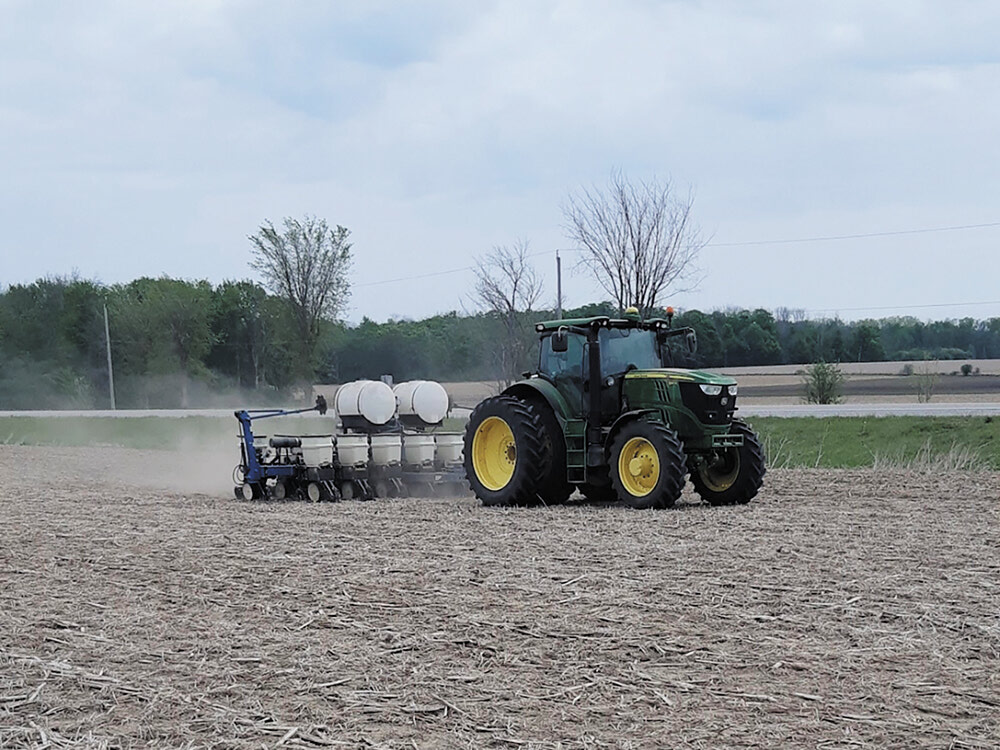
That’s not by design, Nesbit says, as they would love to welcome new members at any time. Having said that, it is a small group that largely does the work itself. Nesbit, Nonkes or another member will usually plant the crop in May when they have the extra time and then another member will usually harvest it in the fall when the time comes. Bigger projects, Nesbit says, can be larger undertakings with more manpower and equipment needed, but for the smaller project in Blyth, they are able to pull it off amongst themselves.
From the practical side, when the group sends its proceeds, they can choose which church to funnel them through. They often split them based on the local denominations, but, the important thing is that the funds are getting to where they need to go.
Nesbit says it’s not just that, though. The Canadian Foodgrains Bank also works with locals in these countries to foster agriculture and other money-making ventures that can help their communities, embodying the hand-up principle through the churches.
On a national scale, the program has now entered its fifth decade. In 2024 alone, the Foodgrains Bank sent nearly $70 million to independent aid agencies in 35 countries. That work helped over one million who had been struggling with food insecurity.
The program dates back to the 1970s when the Mennonite Central Committee first decided to establish a food bank in the hopes that a surplus of grain caused by a year of unusually high yields could be sent to ease the famine in Bangladesh at the time. The food bank was up and running in 1977 and those efforts soon expanded to what is now known as the modern Canadian Foodgrains Bank, which sits as a partnership between 15 churches.
While the work being done locally may be a drop in the bucket of tens of millions of dollars in aid, every drop counts and every bit of effort matters and the Canadian Foodgrains Bank shows that the work of small groups of farmers all across the country can work together to make a big impact for those who need the help the most.
For more information on the Canadian Foodgrains Bank or to make a donation, visit its website at foodgrainsbank.ca.