
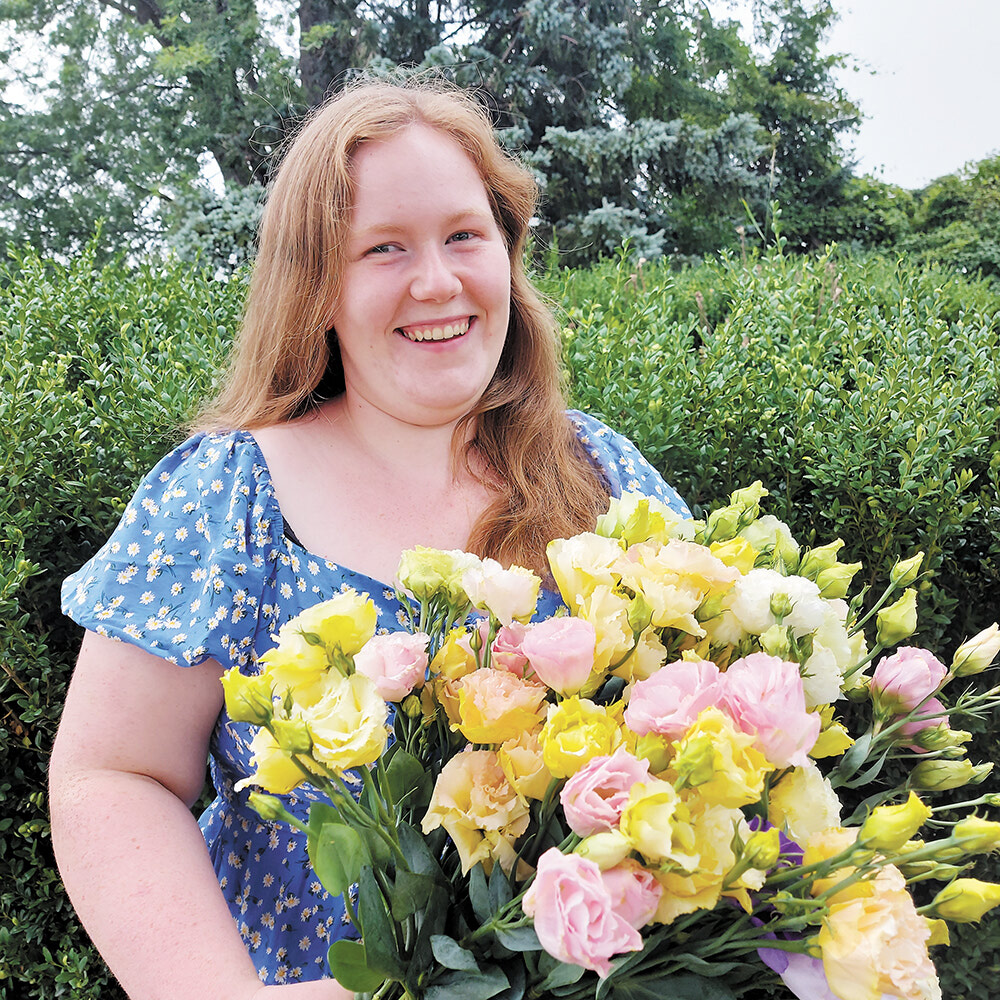
FARM2026: Pentland Farms and Flowers shines as winter turns to spring
BY SCOTT STEPHENSON
On Queenie Pentland’s family farm near Nile, spring has been arriving in colour these days. Rows of tulips push through the soil. Dahlias follow later in the season, their blooms layered and bold. The tightly-wound blossoms of ranunculus add another kind of drama. For a few bright weeks, the fields turn vivid before the flowers are cut, bundled and sent out into the community through roadside stands, local displays and custom orders.
The operation is called Pentland Farms and Flowers, and it began the way many farm ideas do - not through a long strategic plan, but through curiosity. About two years ago, Queenie’s sister Emma decided she wanted to try growing flowers commercially after seeing floral operations online. “Honestly, I think she just saw on Instagram how amazing some things were, and she just wanted to get started with it,” Queenie explained.
What followed was less a carefully-mapped-out business plan than a willingness to try something new. “We just went into it! It was kind of on a whim,” she said. That whim quickly became a very tangible reality when thousands of bulbs arrived at the farm shortly thereafter. “We ordered 13,000 tulips our first year,” Queenie recalled. “They were easy to start, and when we decided to do this, it was the perfect time to go for a late spring/early summer season. It was a perfect time to order them and to get them in the ground for that fall - and it turned out really well!”
Once the tulips proved themselves to be the perfect starter flower for the Pentland’s colourful new venture, the business branched out to include many other flowers. Dahlias were the next to go in the ground, followed by an ever-changing mix of different seasonal flowers. Queenie’s own personal favourite is the ranunculus. “They’re just so gorgeous and elegant!”
Like most farm ventures, the work quickly became a full family affair. “It was pretty easy once you got the hang of it,” she said. “But it’s still a team effort! Practically the whole family is involved - between six to seven of us.” Sister Isabelle is in charge of planning and buying, while their mother, Rosemary, is Manager of Operations.
Sales stay close to home. Flowers appear at roadside stands, local antique markets and through custom orders and deliveries. The materials behind those blooms arrive from across the country. Tulip bulbs come from PEI, while dahlia tubers and seeds are sourced from other growers and seed companies throughout Canada.
While the flowers may look effortless once they’ve bloomed, growing them requires careful consideration. “Probably one of the hardest things is keeping it all consistent,” Queenie explained. “It’s always about timing, and making sure you have a supply of crops. Each season is a different flower - we’re always switching it up and making sure we have a staggered crop. Tulips and dahlias are still the biggest sellers - those are our main ones for seasonal sales, and then we started doing arrangements, so we’d buy in some flowers and do arrangements for the off-season.”
For Queenie, the flower business feels like a natural extension of a life spent in agriculture. “I’ve been involved with farming since I was a kid, helping my dad with chores, and just everything,” she recollected. Her earliest memory of farm life is helping her dad feed the cows.
Looking ahead, Queenie hopes to continue building her future in agriculture - she’s currently Lucknow’s Fall Fair Ambassador, and has plans to start yet another new business in the near future - this time, one centred more on agritourism.
Part of the joy of a flower is the fleeting nature of its beauty. But there is always so much that comes before a bloom reaches its zenith. Before it was transplanted to the Nile area generations ago, the name Pentland first took root in the farmlands of Scotland. In 1963, local historian Margaret Pentland Pritchard traced her family’s name back centuries - all the way to the ancient Picts of Scotland. Some historians believed the word Pict meant the Painted People, a society described by early Roman observers in northern Britain.
Pritchard wrote that these communities lived in rugged landscapes and relied heavily on agriculture and livestock. Over time the name associated with those people evolved, shifting from Pictland to forms such as Paintland and Pentland. The name remains visible in Scotland today in places such as the Pentland Hills and the Pentland Firth. In the 1800s, members of the Pentland family moved from Scotland to Ireland and eventually crossed the Atlantic. Alexander and John Pentland were among the settlers who arrived in what is now Huron County, establishing farms in West Wawanosh Township near present-day Nile and Dungannon.
Across generations, farms change. Crops shift, livestock breeds come and go, and each generation leaves its own mark on the land. Sometimes, like the Pentlands’ flower farm, change begins with a whim sparked by an eye-catching Instagram post.
More than 60 years ago, Pritchard wondered in print what those pioneers might think if they could see modern farms - the machinery, the knowledge and all the changes that had come with time - would they be proud of their descendants?
On a farm where cattle graze beside rows of tulips and dahlias, and where Queenie continues to shape agriculture through instinct, advocacy and quiet resolve, the answer is a resounding yes.