

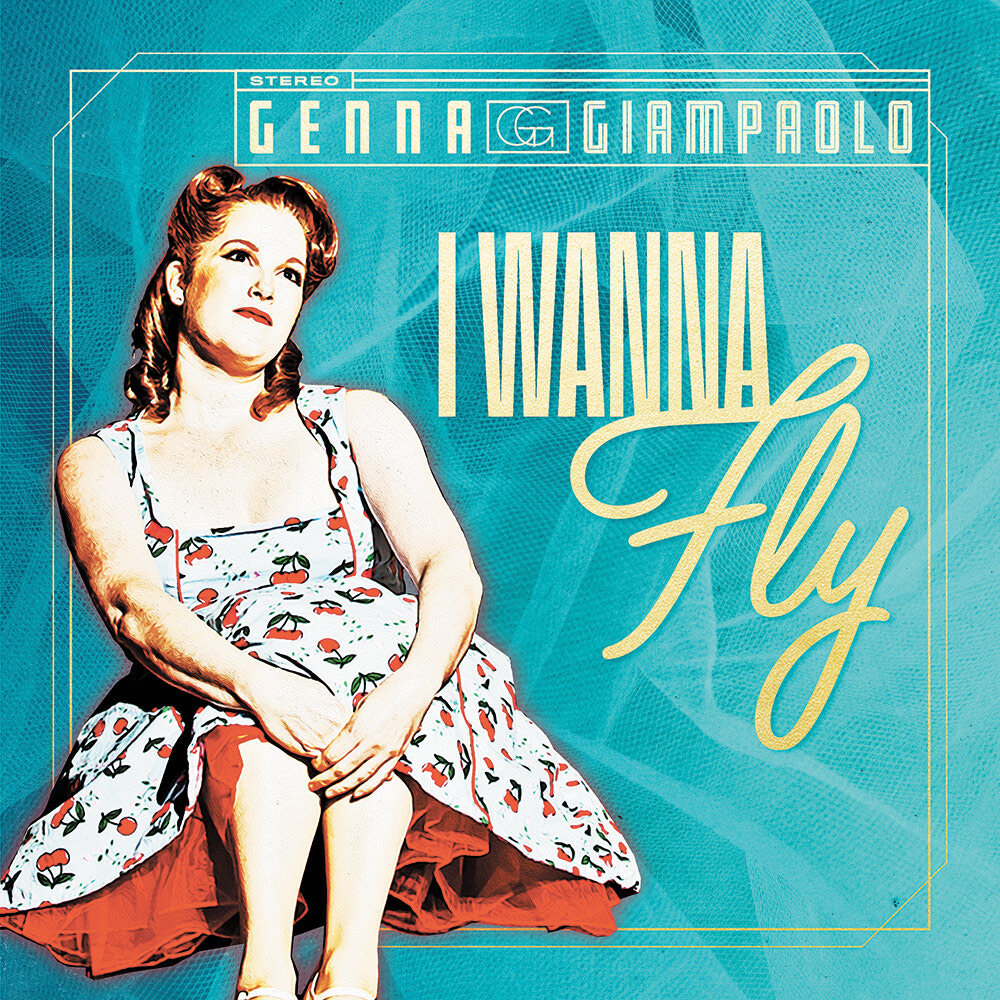
Giampaolo pays tribute to Blyth pioneer, Lorna Bray deBlicquy, with 'I Wanna Fly'
BY SCOTT STEPHENSON
On March 19, singer-songwriter Genna Giampaolo celebrated the release of her new album with a launch party held at the National Arts Centre (NAC) in Ottawa, and the album’s first single “I Wanna Fly” was inspired by Lorna Bray deBlicquy - Blyth’s famed first flying female phenomenon. The single, released on March 8, has already been taking flight with music fans, and so The Citizen called up Giampaolo for a quick chat about how this local hero’s story inspired the multi-hyphenate performer’s new song.
She describes “I Wanna Fly” as a “female-centric, celebrate-the-trailblazing-women-who-paved-the-way song.” That description certainly does describe Bray deBlicquy, who broke barriers to become Canada’s first female civil aviation inspector. Giampaolo first encountered her high-flying story while developing a theatre project with her husband for the Blyth Festival. At the time, Bray deBlicquy’s name was all over town - not only was the Festival developing a production about Bray deBlicquy’s life, Cowbell Brewing Co. had recently launched a stout named Fly Girl in her honour. That was enough to get the couple’s attention, and they began to work on a play set in rural Ontario post World War II featuring a character inspired by Bray deBlicquy.
“Once we started with Lorna Bray, it inspired a rabbit hole of research,” she explained. Digging into local archives, including those at the Huron County Museum, helped them piece together not just the facts of Bray deBlicquy’s life, but the feeling of the era. Along the way, Giampaolo found a few unexpected connections of her own. Bray deBlicquy’s life extended well beyond Blyth, including time spent in Ottawa - Giampaolo’s hometown - a detail that brought the story a little closer to the present. “I found it a fun connection that Lorna Bray spent time in Ottawa, where I’m from,” she said. “It shows how far-reaching these stories are.”
Unfortunately, the onset of the pandemic pressed pause on both potential plays, but “I Wanna Fly” survived. Rather than write a straight biography in song, Giampaolo zeroed in on the moment when a young Bray first dreamed of becoming a pilot. “What is it like to be young in a world where you wouldn’t necessarily be allowed to do what you’re dreaming of? What is that catalyst moment?” she asked.
That question drives “I Wanna Fly.” The very top of the song speaks about when we’re young and we get that first catalyst dream,” Giampaolo told The Citizen. “That little girl watching women soar, dreaming of taking off to find where she could be more - that’s the beginning moment.”
For Bray deBlicquy, that moment came in the shadow of the Second World War, when women taking to the skies was still a novelty. Bray deBlicquy decided she would become a pilot when she was only 14 years old. She soon became the youngest person in Canada to skydive, and received her Commercial Pilot’s Licence in 1952.
“Lorna’s is a story of a woman who was inspired,” Giampaolo pointed out. “Her watching other women learning to become pilots during the Second World War was a driving point for her - to want to do more, to see herself in those shoes… this song is about knowing you are more than what society is telling you you are - you can do more than what you’ve been expected to do.”
Timing, in this case, was everything. The decision to release “I Wanna Fly” on International Women’s Day wasn’t so much a marketing move as a foregone conclusion. “When people suggested a March release, I said it has to be International Women’s Day,” Giampaolo confessed. “This was all about women daring to do great things, and it starts from that simple dream: ‘I want to fly.’ The whole album definitely carries themes of female focus and female empowerment.”
So far, the song appears to be landing exactly where it’s intended. “I had someone come up to me an hour after I performed it, with tears in her eyes,” Giampaolo said. “That’s the kind of impact you dream of.” For an artist working with stories that haven’t always been widely told, that kind of reaction carries extra weight. If a listener walks away having enjoyed the tune, that’s good. If they walk away curious about the woman who inspired the music, even better.
It’s not every day a hometown figure becomes the subject of a jazz single with theatrical roots and a national reach. “I hope it promotes change and inspires people to want to make a difference in a positive way,” Giampaolo said. “I hope it makes people feel seen - and know that anything is possible - that’s the goal: uniting people through music, healing through music, and creating something positive in difficult times… we want the work to make a difference - whether it inspires or just makes someone feel seen,” she said. “I hope it encourages people to learn more about these women - or even go and do something brave themselves.”