
Ink-stained Wretches talk World Press Freedom Day, importance of journalism
BY SCOTT STEPHENSON
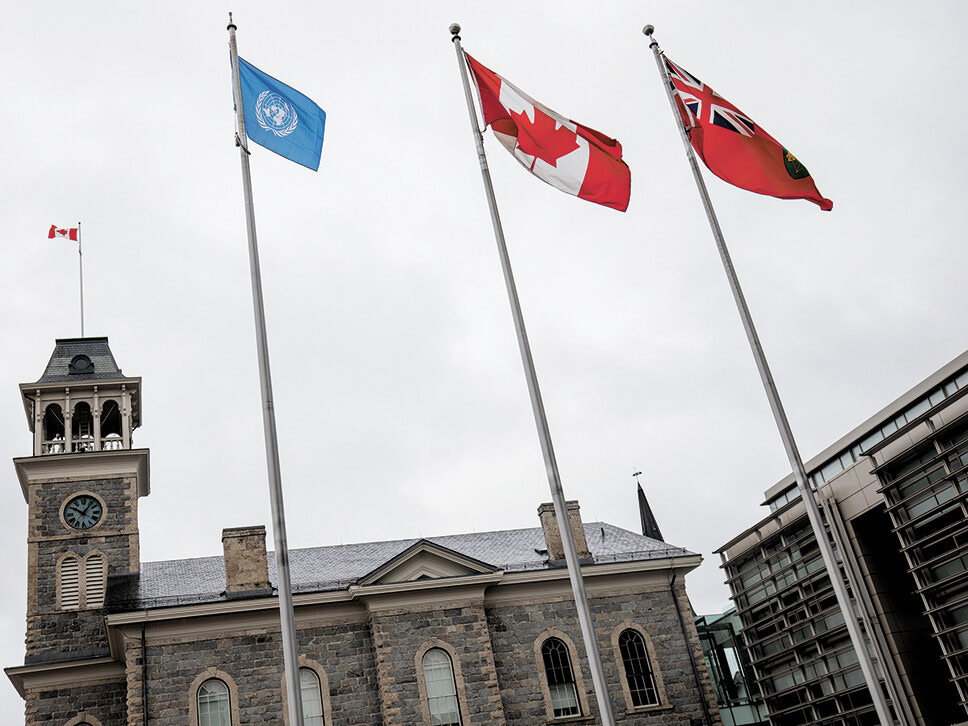
On April 7, North Huron Council voted to deny a community flag-raising request to mark World Press Freedom Day (WPFD) on May 3. The request was made by Mirko Petricevic on behalf of the Ink-stained Wretches - a Waterloo-based advocacy group working to raise the public’s awareness of the importance of accurate reporting in our modern age.
The township’s denial of the request was predicated by language in North Huron’s official flag-raising policy barring flags of a political nature. Petricevic, who spent 28 years working at the Waterloo Region Record newspaper, argues that the freedom of the press is not a political issue - it’s an essential service. In celebration of WPFD on May 3, The Citizen had a quick chat with Petricevic to hear one ink-stained wretch’s perspective on the importance of a free press in the modern age.
“World Press Freedom Day is our biggest public awareness campaign of the year,” he explained. “To me, it’s one day that we can all kind of reflect on the importance of press freedom to a healthy democracy, and to strong communities. I think we often take it for granted, and so this is our way of trying to sensitize people to the concept of the importance of press freedom in our communities, and to alert them to the precarious state of journalism in our country over the past 15 years.”
The Ink-stained Wretches formed in Waterloo in 2020. In addition to spreading awareness ahead of WPFD in May, the group also puts on an annual film festival and offers online resources to municipalities year-round - all in an effort to restore the public’s faith in the free press.
Petricevic points out that an erosion of the public trust is not unique to the field of journalism. “I think it’s part of a wider societal trend - trust is going down in our public institutions and journalism is one of them,” he said. “Since the 1960s, trust in government, trust in business, trust in the news media, trust in the church - I think the news media is not singularly distrusted.”
In Petricevic’s experience, elected leaders are generally understanding of the importance of press freedom to a healthy democracy. Different municipalities have chosen to acknowledge WPFD in different ways. “Some will just raise a community flag,” he told The Citizen. “Some will issue a proclamation by the mayor, or through council. Some will light the water tower - the water tower in Selkirk, Manitoba, is lit for World Press Freedom Day.”
One factor that Petricevic believes contributes to a lack of trust in journalism is an over-reliance on social media platforms to obtain information that would have previously come from a trusted local news source. “Many people will say they get news from Facebook, even though Meta has blocked news from Facebook and Instagram since 2023,” he pointed out. “One of our concerns is that they don’t understand that quality journalism is strained - it’s in a very precarious position.”
He points out that, unlike social media, traditional news media, when done well, strives to uphold certain journalistic principles - things like accuracy, balance and verification. “Those are all things that we learn as journalists,” Petricevic noted. “I think that part of the response to that is just continuing to do good quality work and accountable journalism. Keep on keeping on, basically.”
While knowing what to believe in the golden age of misinformation grows increasingly difficult, Petricevic feels that all is not lost when it comes to trusting one’s local source of news. “I actually think that there’s more trust there than we often give credit for,” he opined. “I think that a low-trust narrative often gets repeated without context - that’s maybe one of the issues of perception that we have… I don’t think that mainstream news media do a good enough job of connecting the dots for people about the community service that they provide.”
Petricevic knows that one of the primary functions of local news reporting is bringing people together. “In smaller communities and larger communities, it helps knit the community together. People get to know what’s going on in town,” he told The Citizen. We see the obituaries. So many times now, I’ll hear people say, ‘oh, so and so died months ago - I didn’t know anything about it.’ Well, people aren’t buying obituaries in the paper to know what’s going on with people.”
Beyond keeping citizens abreast of community goings-on, having a trusted local news source comes with other benefits. “A lot of people don’t realize how much time and money they personally save when there’s a local news outlet,” Petricevic explained. “Here’s just one example: 25 years ago, in Waterloo, they were financing a large sports complex. It was a financial fiasco - I won’t get into the details, but the Waterloo Record basically saved the city $82 million back then. In today’s dollars, that’s probably $3,000 per household. And that’s just one investigation!” he declared. “So, if the democracy argument is too abstract and people aren’t concerned about it - everybody’s concerned about pocketbook issues.”
Historically, news managers and editors have shied away from boasting about the importance of their own reporting, but Petricevic believes that mindset may need modernizing. “Now everybody owns a press - everybody’s on the internet. I think that it would be helpful to set that kind of old-fashioned modesty aside, to connect the dots for the community, to show how they are a community resource,” he said. “There’s a lack of understanding of how much of a public service that quality journalism is.”
He and the other Ink-stained Wretches hope to help people increase their media literacy. “It’s being able to distinguish what is quality journalism, and what’s not. What’s just noise - what’s just polemics on social media,” Petricevic points out. “We really need to work on building that culture of appreciation for quality journalism, and that’s the thread that goes through anything we do - any kind of quality journalism is a check on power, or a potential abuse of power, and that can happen in small communities as well as in big cities.”
The resources section of their website contains all sorts of tips for people looking to show support for the free press - even the smallest gesture can make a major difference. “There are many ways that people can support local news without spending a dime,” he explained to The Citizen. “One part of that is, if you see an ad in the paper, and you find it useful, and then you’re at that business, say to the business - ‘hey, I saw this in the paper’. That’s a little thing you can do that costs nothing.” Letting advertisers know that buying ad space in the local paper really does work, which can lead to a steady source of revenue to keep the presses ready to roll.
Another tip from Petricevic and the other Ink-stained Wretches - start looking at the free press as something worth protecting and preserving. “WPFD is completely non-partisan,” he said. It’s as non-partisan as something like World Water Day… I hope that, eventually, people in the community reframe their thinking about the value of local news - it’s not just a product to buy, but a community resource to support.”