
Lavender Works started small, but continues to innovate year after year
BY SHAWN LOUGHLIN
Just southeast of Ethel in Huron East, Lavender Works has transformed part of an area cash crop farm, leaning into the family’s interests and spreading calming, pleasant-smelling vibes throughout the community.
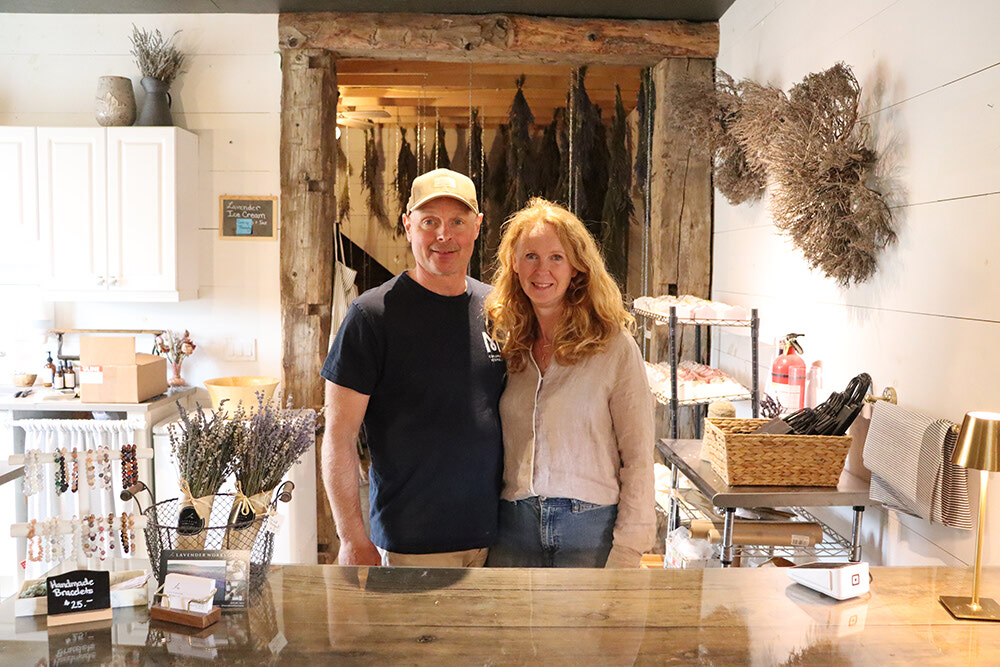
Julianne and Gary Terpstra, when they took the time to speak with The Citizen, were about a week away from picking up this year’s lavender plants from the Niagara region for the summer ahead. The planting then goes ahead in June and into July, with the harvest in late July or early August, though, as Gary is quick to remind, just like traditional farming, every year is different.
From there, about 10 per cent of the season’s yield is held back and hung for drying. This lavender is used for decoration or for scent pillows or sachets. However, the bulk of the harvest is distilled in a copper still, the couple ordered from Portugal down to its oils, which are then used in all kinds of ways.
As an essential oil and with all of its properties, there is the oil for sale at the on-farm store, of course, but then there are a number of other products, such as a pillow and room spray, soap, which is among their biggest sellers and ice cream and cookies, to name a few. Julianne notes that everything - with the exception of the food items, which utilize local partners in Gowanstown and Waterloo - is made on-site at the farm and with no artificial ingredients. Everything is completely natural, which is not just how she likes it, but her customers like it as well.
Starting at the beginning, the farm is generational, with Gary’s family tending the land for years before him. He is a cash crop farmer who is now semi-retired, lending most of his time and effort to the lavender farm now.
He says that the lavender portion of the farm is not so dissimilar from traditional farming on that land, with attention to detail needed and fluctuations from season to season to be expected.
As farming so often does, it begins with the soil and for lavender, to grow it successfully, you need to have the right soil and the Terpstras were lucky. The plant requires a sandy-type soil with a pH level of six to thrive.
Growing a plot of flowers at the farm was an interest of Julianne’s, so she had always had somewhat of an idea in the back of her mind. But it wasn’t until 2019 that she actually put it into motion.
That year, the Terpstras grew a test plot of lavender and were overwhelmed with the results. So captivated were the Terpstras that they went all in the next year. In 2020, they put 2,000 plants into the ground and Lavender Works was off to the races.
In those early years, there was a lot of trial and error, Gary said. They were learning as they went along as well, but Julianne says that she’s very thorough with her research and determined to get things right when she takes them on, so things went well for those early years mostly because she spent so much time researching, taking courses and experimenting.
She has taken a number of classes connected to the business, including one on making soap, that have helped shape the business into what it is today. It’s constantly growing and evolving and bringing new options to the customers every season.
For example, they’ve recently launched a men’s line with the essential oils from the lavender and are looking at expanding their offerings at the farm, including meditation and relaxation sessions at the farm’s greenhouse, special events (including on Mother’s Day with a special coffee day with the help of Boundary Roasting Co. and an opportunity to pick your own tulips) and more.
As for the planting and caring of the lavender, the Terpstras acknowledge that it’s labour-intensive work that requires constant care and attention, as well as a lot of hands-on work. Everything at their farm, they said, is done by hand. They use a small version of a hedge trimmer, but that’s about it - the rest of the lavender comes from their hands to your homes.
The plants are covered over the winter to shield them from the cold and snow and eventually uncovered in the spring but, notably, Julianne says that the covers aren’t put away just yet, as they’re likely to still be needed as frost hits or temperatures drop through the night.
The lavender plants are then cared for, trimmed back and nurtured just like any other plant as spring turns to summer and the weather warms up in Huron County.
The Terpstras grow various types of English lavender, which is known as being heartier and more agreeable to harsher climates, while x intermedia, also known as French lavender, can be a little more demanding as far as conditions are concerned. Thus far, they have worked with four varieties of English lavender and two French lavender varieties, but are always looking to expand their offerings.
One of the main areas of trial and error has been the blends of different varieties of lavender. Because the Terpstras are so committed to all-natural products, achieving the right scent or texture is entirely up to them and cannot be aided by artificial agents, so the mixing work plays a huge role at Lavender Works.
Sales for Lavender Works began modestly with Julianne selling lavender oil out of their garage at the farm. However, as interest continued to grow and word-of-mouth continued to spread, the crowds kept getting bigger and the shelves were becoming more empty.
They then built the on-farm store, which is where they make everything, including drying the lavender and distilling the oil (outside) and a greenhouse that works for the farm, but has often doubled as a backdrop for couples seeking a picturesque location for some intimate pictures together.
In addition to what the Terpstras create and sell, they are also a bit of a hub for others looking to grow lavender as well. If people are looking for tips and best practices, they are always happy to help share what helped make their journey so successful.
Lavender Works is located at 44702 Newry Road, east of Brussels. The Terpstras can be reached at 519-291-7613 or at their website at lavenderworks.ca.